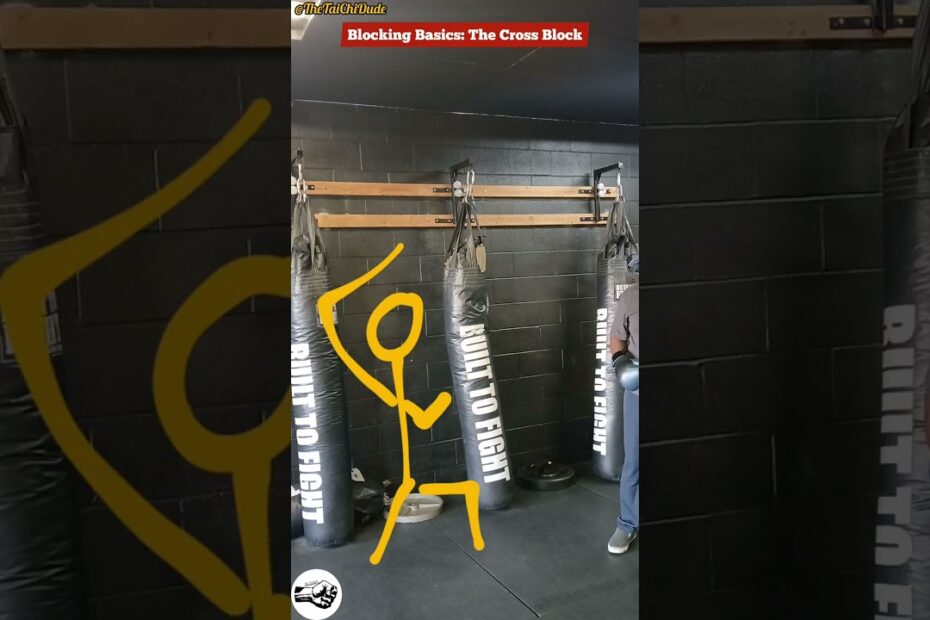
The block was one of the first self defense moves I learned. I learned from my Instructor Dr. Israel Mak, D.C. His philosophy was simple: You need to protect yourself first. Then I thought in my head, that’s why they call it self defense.
Blocking is one of the most fundamental skills in martial arts, yet it is often misunderstood. The cross block system simplifies defense into a practical and adaptable framework that can be applied in real-world situations.
At the heart of the cross block system lies a simple principle: every attack can be defended using one of four directions:
Up.
Down.
Left.
Right.
That’s all you need to remember. Those are the only four directions.
Why Simplicity Matters in Combat
In real combat scenarios, speed and clarity matter more than perfection. The cross block system trains your body to respond instinctively rather than analytically. By practicing directional blocking repeatedly, you develop:
- Faster reaction times
- Improved coordination
- Reduced hesitation under pressure
1. Slow Partner Drills
Start with a partner throwing controlled, slow punches. Focus on accuracy and correct direction rather than speed.
- Up – to defend against rising or high strikes
- Down – to stop downward or low attacks
- Left – to redirect attacks coming from one side
- Right – to counter strikes from the opposite side
2. Directional Repetition
Practice sequences such as:
- Up → Down → Left → Right
- Left → Right → Down → Up
- Down → Left → Up → Right
- Right → U[p →Down →Right
There are many combinations you can practice.
This builds memory and adaptability.
3. Add Strikes
Once comfortable, begin adding counterattacks after each block. This reinforces the offensive mindset.
4. Expand to Kicks
Apply the same four-direction principle to defending kicks. The system remains consistent regardless of attack type.
Video Demonstration: How To Block: The Cross Block
Key Principles to Remember
- Keep your guard up at all times
- Stay relaxed but ready
- Adapt based on the direction of the attack
- Avoid rigid patterns—focus on responsiveness
- Always look for counterattack opportunities